Clipper Guard Numbers Explained: How to Ask Your Barber for the Right Haircut
September 11, 2026 · 9 min read · Denham Springs, LA
The single biggest reason people leave a barbershop disappointed is not skill. It is language. Two men can say “short on the sides” and mean completely different haircuts. This guide breaks down clipper guard numbers, fade heights and the handful of words that remove all guesswork — the same vocabulary our barbers at Blends Barbershop in Denham Springs, Louisiana use every day at the chair.
Clipper guard numbers in plain inches
A guard is the plastic comb that clips onto the clipper and controls how much hair is left behind. The number is the length it leaves, not the length it removes.
- No guard (bald / zero) — shaved to skin, about 1/50 inch.
- #0.5 — roughly 1/16 inch. A shadow, not skin.
- #1 — 1/8 inch. Very short; scalp shows through on most hair types.
- #2 — 1/4 inch. The most common “short sides” length.
- #3 — 3/8 inch. Short but still clearly hair; forgiving as it grows.
- #4 — 1/2 inch. Conservative, blends easily into longer tops.
- #5 to #8 — 5/8 inch up to 1 inch. Used for tops, longer tapers and scissor-over-comb alternatives.
Hair density changes how a number reads. A #1 on fine, light hair can look nearly bald, while a #1 on thick, coarse hair still shows texture. If you are unsure, go one number longer — a barber can always take more off, never put it back.
Fade height: low, mid, high and drop
The guard number tells your barber how short. The fade height tells them where the shortest point sits and how far up the blend travels.
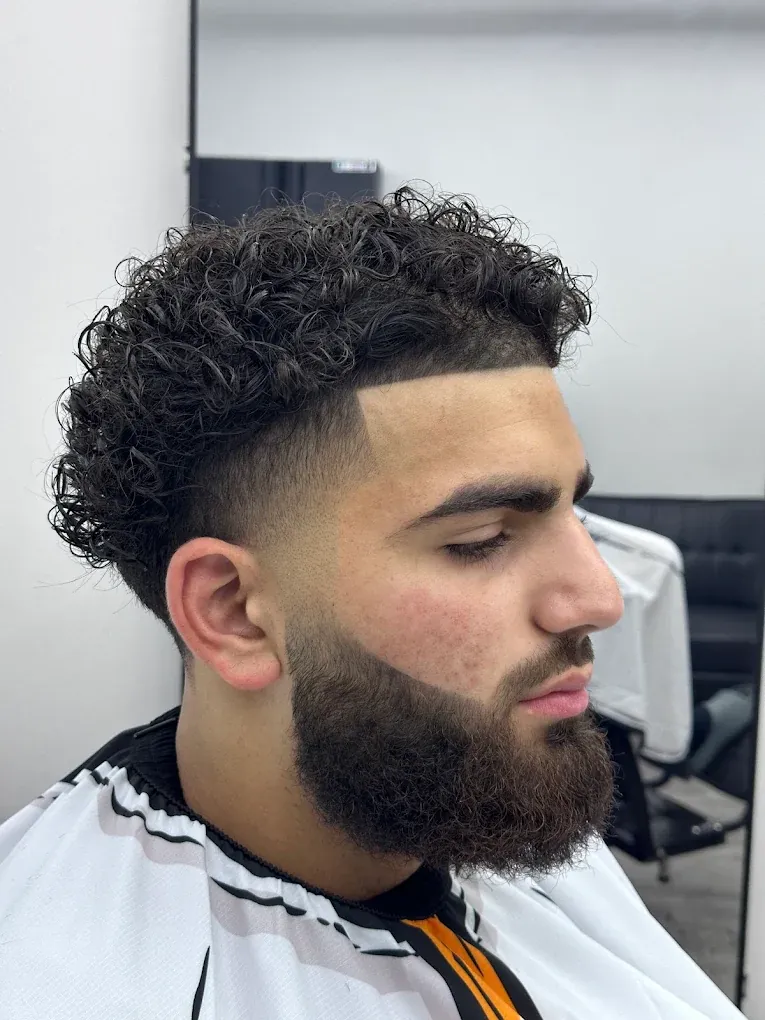
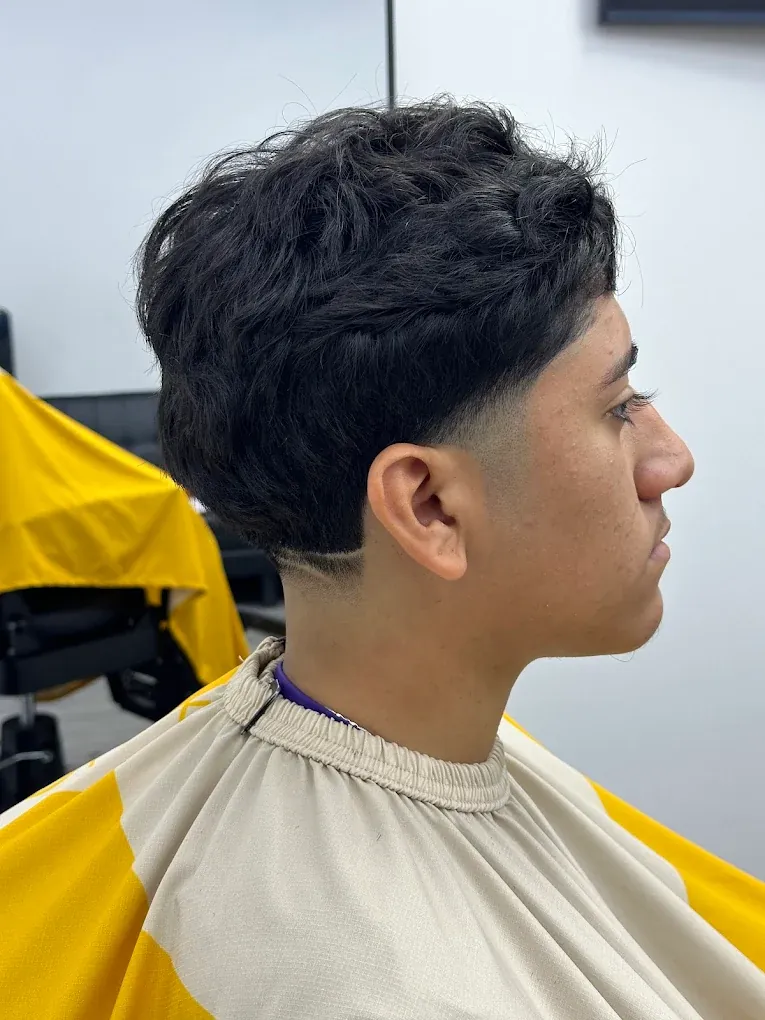
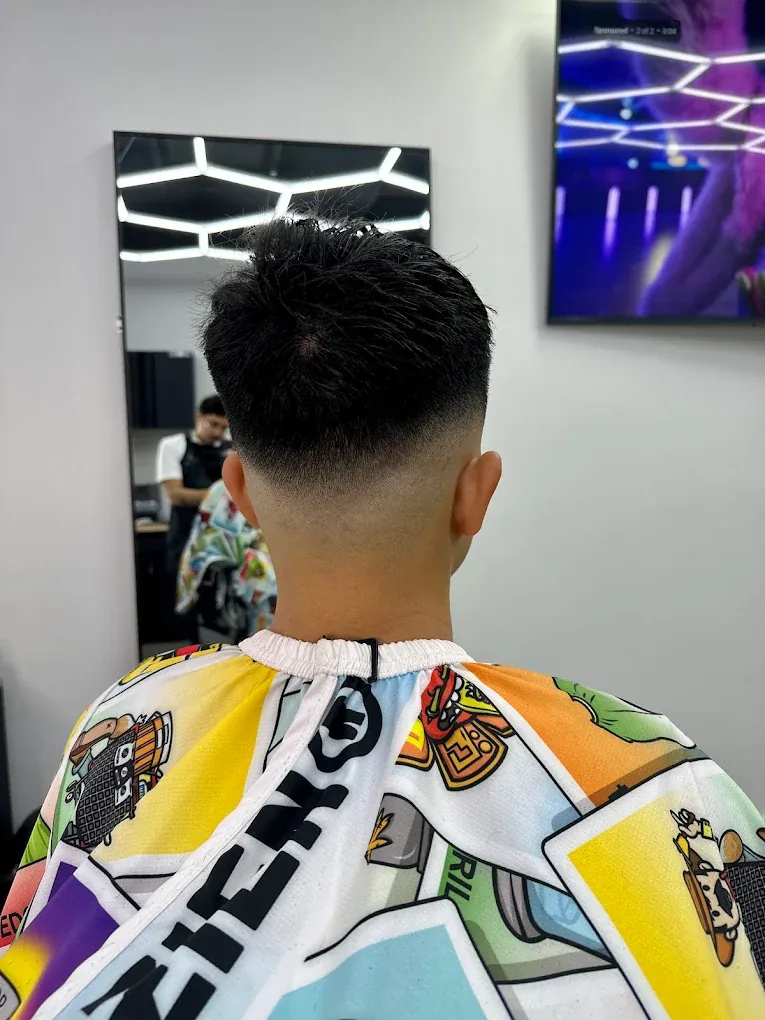
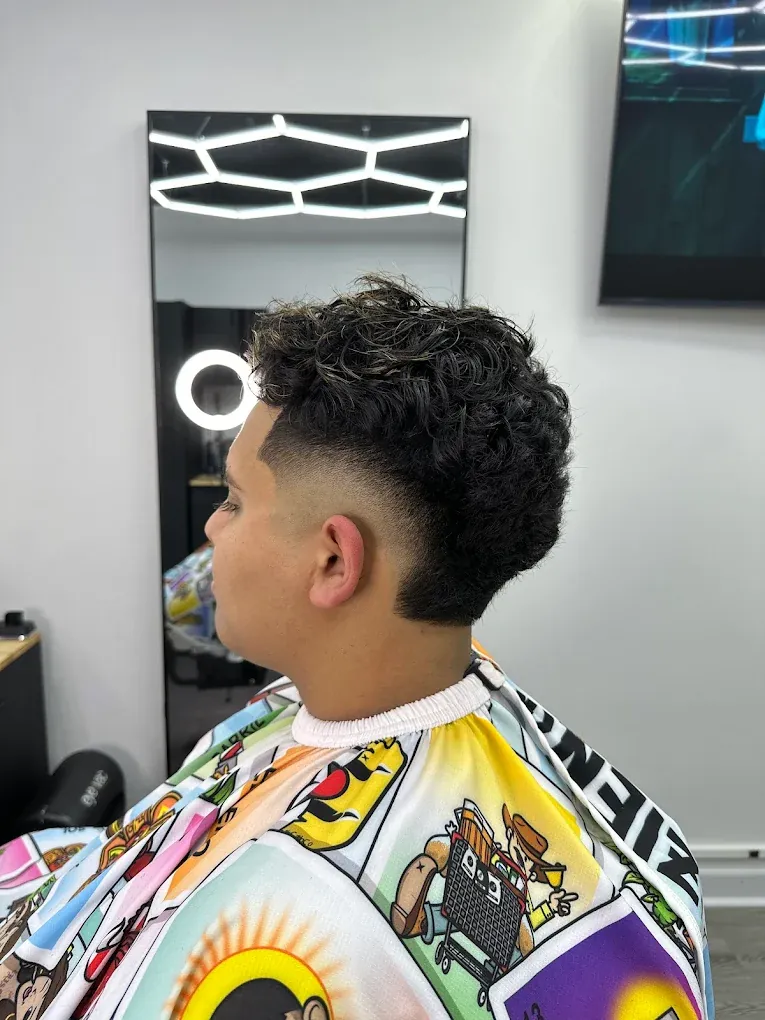
- Low fade — the blend starts just above the ear and hairline. Subtle, professional, grows out softly.
- Mid fade — starts around the temple. The most balanced option and the most requested at our shop.
- High fade — starts near the parietal ridge (the corner of the head). Maximum contrast, bold, needs upkeep every one to two weeks.
- Drop fade — the fade line curves down behind the ear, following the head shape. Flattering on rounder head shapes.
- Burst fade — fades in an arc around the ear only, leaving weight in the back. Common with mohawks and mullets.
If you want the difference explained in more depth, read our breakdown of a skin fade versus a taper fade.
Skin fade or taper — the second decision
A skin fade takes the bottom all the way to bare skin. A taper leaves a short amount of hair at the perimeter. Both can be low, mid or high. Say both words together and you have already communicated more than most clients: “low skin fade” or “mid taper.” Book either at our skin fade or taper fade service pages.
What to say about the top
Sides are simple because they are measured. The top is where haircuts go wrong. Avoid inches unless you actually know them — most people underestimate. Instead, describe the result:
- “Take off about an inch, keep the length so I can still push it back.”
- “Texture it out, it is getting too heavy on top.”
- “Keep the front long enough to fall on my forehead.”
- “Just clean it up, do not change the shape.”
Then pinch the hair between your fingers and show how much you want gone. A visual takes two seconds and beats any number.
Lineups, edge-ups and the hairline conversation
A lineup (also called an edge-up or shape-up) is the crisp straight edge cut into your hairline at the forehead and temples. It is what makes a fresh cut look photographed. Two things to decide before the razor starts:
- How far back? Squaring the hairline too aggressively can push a receding line back permanently over time. A good barber follows your natural line and only cleans strays.
- Sharp or natural? Ask for a “soft lineup” if you want it to grow out without a hard shelf.
Learn more on our lineups page.
The 20-second script that gets it right
Put it together in one sentence, in this order: fade type, fade height, guard number, top, lineup, beard.
“Mid skin fade, start it around the temple, #2 up top of the fade, take about an inch off the top and texture it, sharp lineup, and clean up the beard neckline.”
That one sentence removes every ambiguity a barber would otherwise have to guess at.
Photos: how to use them well
Bring a photo, but bring the right one. Reference images work best when the model has hair that behaves like yours — similar texture, density and hairline. Photos from the back and side tell a barber far more than a front-facing headshot. And say out loud what you like about the picture: the fade height, the top length, or the shape. Barbers can adapt a style to your head; they cannot change your hair type.
Words that mean different things than you think
- “Trim” — means almost nothing on its own. Say how much.
- “Short” — relative to your last cut, not to a standard. Reference a guard number instead.
- “Blended” — means no visible line between lengths. If you want a visible step, ask for a disconnect.
- “Thinned out” — usually means texture removal with shears. On curly or coarse hair this can backfire; ask for point-cutting instead.
- “Tapered” — often used loosely to mean any short back and sides. Clarify with a height.
How often to come back based on your number
The shorter the guard, the faster it grows out of shape. Hair grows about half an inch a month, so a #1 changes noticeably in a week while a #4 holds for a month. Our full breakdown lives in how often you should get a haircut, but the short version: skin fades every one to two weeks, tapers every two to three, scissor cuts every four to six.
Frequently asked questions
What guard number is best for a first-time fade?
A #2 at the shortest point with a low or mid fade is the safest starting point. It is short enough to look intentional and long enough that you will not feel exposed.
What is the difference between a #1 and a #1.5?
About 1/16 inch. It sounds trivial, but at those lengths it is the difference between seeing scalp and not. Many barbers use half guards specifically to smooth the blend between numbers.
Is a taper the same as a fade?
Every fade is technically a taper, but not every taper is a fade. In practice, “fade” implies a dramatic blend down to very short or skin; “taper” implies a gentler, shorter transition at the perimeter.
Should I wash my hair before a haircut?
Clean, dry, product-free hair cuts most accurately. Skip the gel or pomade on the morning of your appointment.
Can I ask my barber to change something mid-cut?
Absolutely, and sooner is better. Speak up when the fade height is being set, not after the blend is finished.
Book with a barber who asks the right questions
At Blends Barbershop on Florida Blvd in Denham Springs, we consult before the clippers turn on — guard, height, top, lineup — so there are no surprises in the mirror. We serve Denham Springs, Walker, Central and greater Livingston Parish, seven days a week. See our services or book your barber online in about thirty seconds.